AI Mode Is Now the Default Android Search — What It Means for Brand Visibility
By Jakub
TL;DR
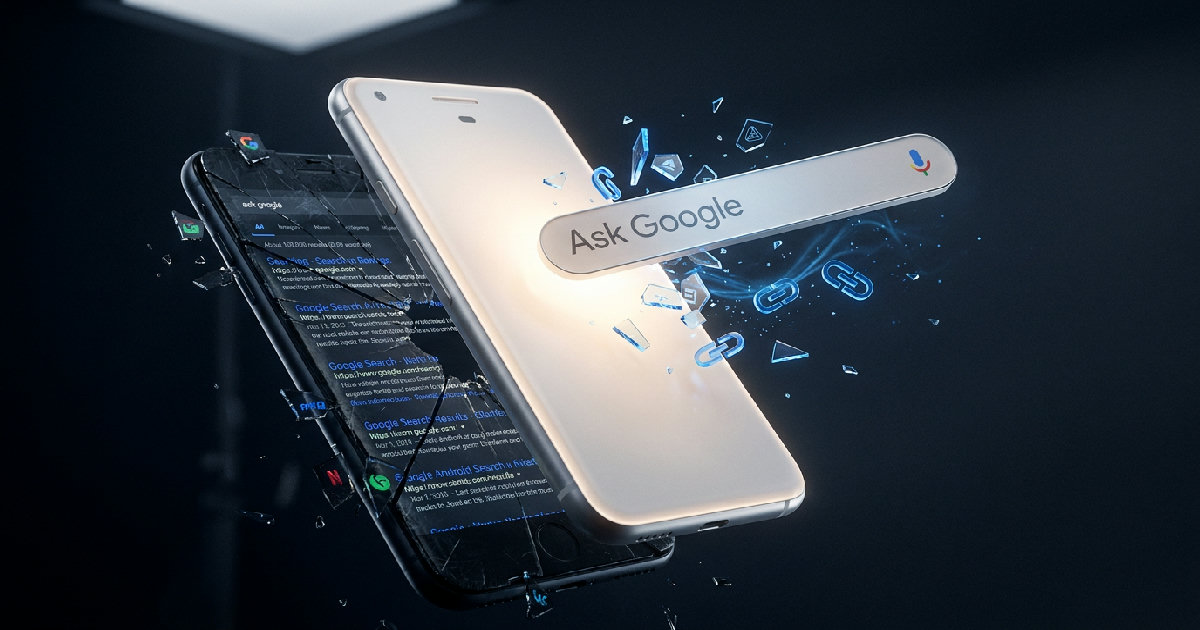
On April 29, 2026, Google began rolling out a redesigned Android Search bar that replaces the classic "Search..." prompt with an "Ask Google" button and adds a direct shortcut to AI Mode. One day later, Google shipped a Gemini upgrade that makes AI Mode responses deeper and faster. The combined message is clear: AI Mode is no longer a destination you opt into — it is becoming the default search surface on 3+ billion Android devices.
For brands that still optimize exclusively for traditional blue-link SERPs, this is a visibility wake-up call.
What Changed on April 29–30
Two things happened almost simultaneously:
1. The Android Search bar redesign. Tapping the Search bar on the Pixel Launcher (and soon other Android devices) now shows "Ask Google" instead of "Search...". The Google logo has been replaced by a plus menu that lets users attach images, switch to AI Mode, or generate images with Nano Banana. This mirrors recent AI Mode integrations into the Chrome address bar — Google is embedding AI Mode into every search entry point at the OS level.
2. The Gemini upgrade for AI Mode and AI Overviews. Google announced deeper reasoning, multimodal capabilities, and faster response times for both AI Mode and AI Overviews. The engine behind AI-generated search answers just got materially better — right as millions more users are being funneled into it by default.
These are not isolated product updates. Together, they signal a strategic inflection: Google is moving AI Mode from an experimental feature to the primary way people interact with Search on mobile.
Why This Matters for Brand Visibility
Traditional rank trackers measure your position in a list of ten blue links. But when the user's default search interaction is an AI-generated answer, your ranking in a list matters less than whether the AI mentions you at all.
This shift has been building for months — through AI Overviews, zero-click search trends, and the rise of answer engines. But the Android Search bar change accelerates the timeline dramatically. AI Mode is no longer something power users seek out. It is what every Android user sees first.
3 Brand Visibility Indicators to Track in AI Mode
If you are not already measuring your brand's presence in AI-generated search responses, now is the time to start. Focus on three indicators:
Citation rate. How often does AI Mode cite your content (with a link) when answering queries in your category? This is the closest equivalent to traditional ranking — but instead of position 1–10, you are either cited or invisible.
Mention rate. How often does AI Mode mention your brand by name, even without a direct link? Brand mentions in AI responses build familiarity and drive branded search queries downstream. Tools like Be Recommended can help you track this across multiple AI search surfaces.
Query coverage. Across your target keyword set, what percentage of queries trigger an AI Mode response that includes you? A brand might have strong citation rates on 5 queries but be completely absent from the other 50 that matter. Coverage tells you the full picture.
4 Quick Wins Before Google I/O (May 19)
Google I/O on May 19 and Marketing Live on May 20 will almost certainly bring another wave of AI Mode features. Use the next two weeks to position your brand:
1. Audit your FAQ and knowledge-base content. AI Mode pulls heavily from well-structured Q&A content. Make sure your site has clear, concise answers to the questions your audience asks — formatted with proper headings and schema markup.
2. Refresh recency signals. AI Mode weights freshness. Update your most important pages with current data, dates, and references. A page last updated in 2024 is less likely to be cited than one refreshed this month.
3. Build third-party mentions. AI models synthesize information from multiple sources. If your brand is mentioned on YouTube, Reddit, industry publications, and review sites, AI Mode is more likely to surface you. Invest in digital PR that drives AI visibility, not just traditional backlinks.
4. Strengthen your entity profile. AI search engines think in entities, not keywords. Make sure your brand has a clear, consistent identity across the web — from your entity SEO foundations to your Google Business Profile, Wikipedia presence, and structured data.
What to Watch at Google I/O
Based on the trajectory of the past three months, expect Google to announce expanded AI Mode availability (beyond the US), deeper integration with Google Ads (sponsored results within AI Mode answers), and possibly an API or reporting surface that lets brands see how AI Mode handles their queries.
The Preferred Sources feature (rolled out April 30) — which lets users tell Google which sites they trust — adds another dimension. Google is tuning both user-driven preferences and AI-driven citations in parallel. Brands that are already visible to the AI and trusted by users will compound their advantage.
Key Takeaways
AI Mode is graduating from experiment to default. The Android Search bar change means billions of search interactions will flow through AI-generated answers instead of traditional SERPs. Brands need to measure citation rate, mention rate, and query coverage — not just keyword rankings. The window before Google I/O is an opportunity to get ahead of the next wave.
Start tracking your AI visibility today at berecommended.com.
Sources
- Android's Search bar now lets you Ask Google and AI Mode — 9to5Google, April 29, 2026
- AI Mode and AI Overviews updates — Google Blog, April 30, 2026
- Google now lets you explore the web side by side with AI Mode — TechCrunch, April 16, 2026
Stay ahead of the AI curve
Get weekly insights on AI visibility, search optimization, and brand strategy — straight to your inbox.